Description
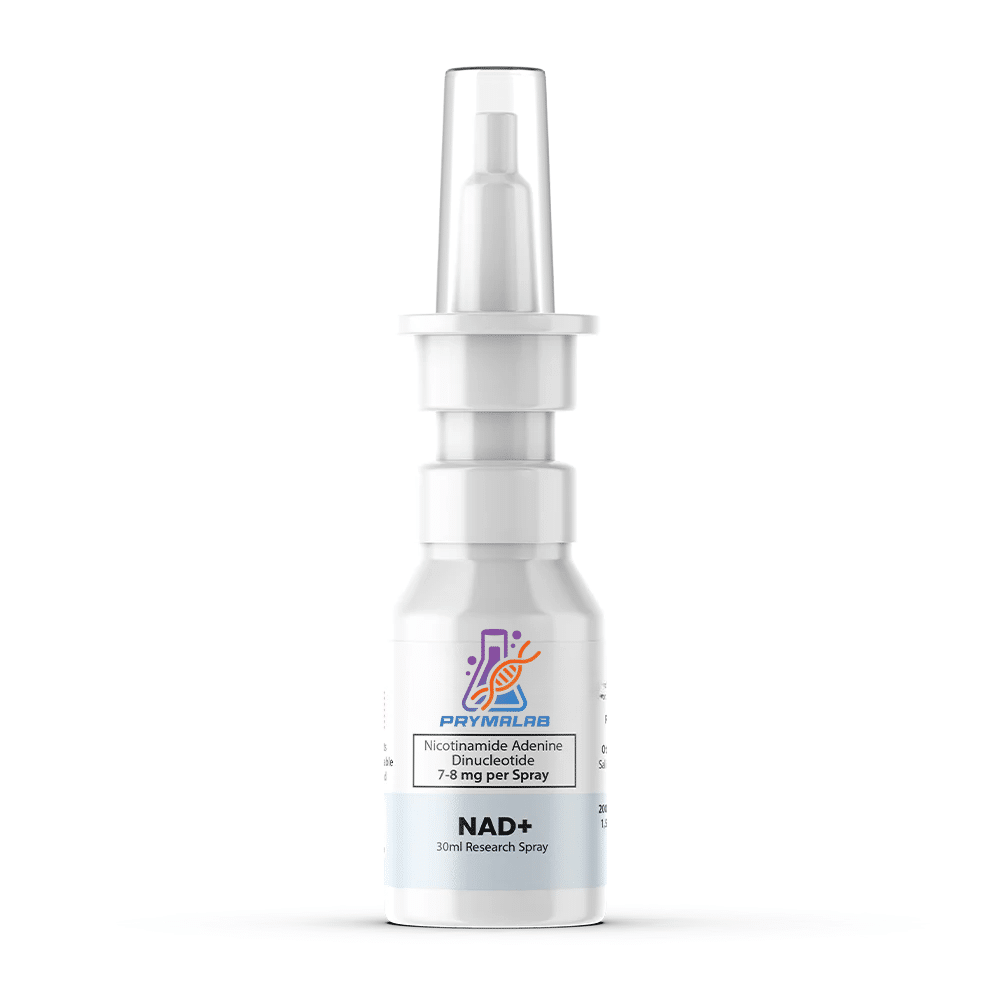
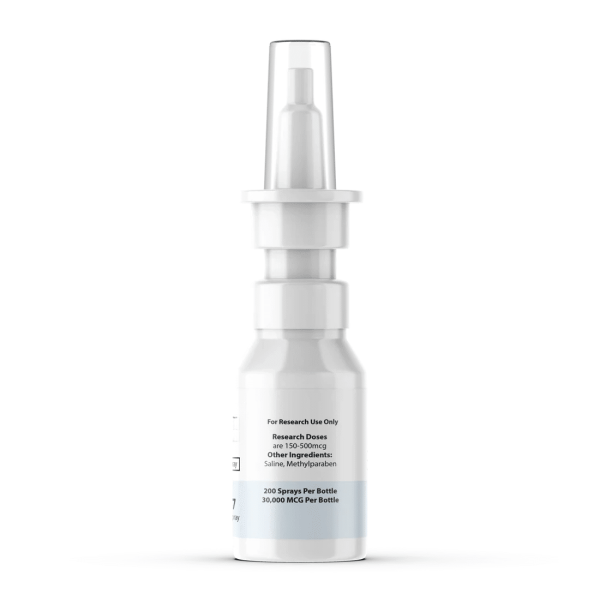
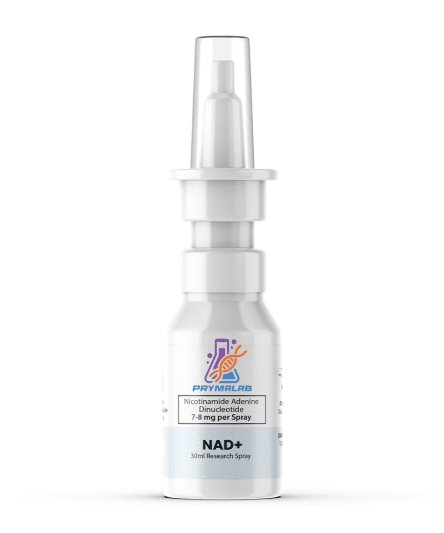
What Is NAD+ Nasal Spray?
NAD+ nasal spray is an intranasal supply form of nicotinamide adenine dinucleotide (NAD+), the oxidized form of the essential coenzyme found in every living cell. NAD+ (CAS 53-84-9) carries the cell-level formula C21H27N7O14P2⁺ with a molar mass of 664.4 g/mol. By delivering NAD+ directly across the nasal mucosa, this intranasal delivery form bypasses the gut tract and first-pass hepatic body function — the two main barriers that limit oral NAD+ uptake and bioavailability in lab models.
NAD+ was first identified in 1906 by Arthur Harden and William John Young while studying yeast fermentation. Its role as a central redox coenzyme and substrate for longevity-linked enzymes — including sirtuins (SIRT1–SIRT7) and poly(ADP-ribose) polymerases (PARPs) — has made it one of the most studied molecules in healthy aging, cellular aging, and body function research. PrymaLab NAD+ Nasal Spray is produced under strict quality control protocols, verified by independent HPLC and mass spectrometry test, and supplied exclusively for qualified research uses.
Mechanism of Action: How NAD+ Functions at the Cellular Level
NAD+ operates through four interconnected biochemical pathways that collectively regulate cellular energy status, cellular repair, genomic shelf life, stress response, and longevity signaling. Each of these pathways represents an active area of lab and clinical research.
Redox Coenzyme Function
NAD+ serves as the main electron carrier in cellular function and mitochondrial function, including within the brain cell, accepting hydride ions (H⁻) from substrates during glycolysis, beta-oxidation, and the citric acid cycle to become NADH. NADH then donates these electrons to the energy-cell electron transport chain, driving ATP synthesis and overall cellular energy production through oxidant phosphorylation.
Sirtuin Activation
Sirtuins (SIRT1–SIRT7) are NAD+-dependent deacetylases that regulate gene expression, energy-cell biogenesis, DNA repair, and swelling signaling by removing acetyl groups from histone and non-histone proteins. Because sirtuin activity is directly dependent on NAD+ supply, declining cellular NAD+ levels with age result in reduced sirtuin activity — a mechanism proposed to add to the hallmarks of cellular aging. Lab research shows that restoring NAD+ levels rescues sirtuin activity in aged tissue models.
PARP Enzyme Substrate
Poly(ADP-ribose) polymerases (PARPs) consume NAD+ as a substrate during DNA damage repair, using it to synthesize poly(ADP-ribose) chains that recruit DNA repair machinery to sites of strand breaks. As genotoxic stress builds up with aging, PARP activity increases and NAD+ is consumed at a faster rate. Li et al. (2017) showed that declining NAD+ levels permit increased binding of DBC1 to PARP1, impairing DNA repair — a mechanism that may underlie age-related genomic instability.
CD38 and NAD+ Decline
CD38 is an ectoenzyme whose activity increases greatly with age and chronic swelling, consuming NAD+ at rates that outpace biosynthetic capacity. Research by Camacho-Pereira et al. (2016, Cell Body function) showed that CD38 knockout mice keep higher NAD+ levels than wild-type controls throughout aging, and are protected from age-related body decline. This pathway represents one of the most major targets in age-related NAD+ depletion research.
NAD+ Nasal Spray Benefits: What Preclinical Research Shows
The following research context is drawn from peer-reviewed lab and translational literature. All data reflects research settings. PrymaLab NAD+ Nasal Spray is supplied exclusively for laboratory research and is not intended for human treatment use.
Cellular Energy Metabolism
NAD+ use in aged animal models has been linked with restoration of energy-cell NAD+ pools, gain in the NAD+/NADH ratio, and enhanced ATP production efficiency to address metabolic fatigue. Studies using NMN and NR as oral NAD+ precursors have documented body gains in aged rodents, particularly regarding metabolic health; intranasal supply of NAD+ itself offers a direct replenishment mechanism that bypasses the enzymatic conversion steps needed by precursors, possibly providing faster intracellular supply in research models.
Neuroprotection and Cognitive Function
NAD+ plays a key role in neuronal energy body function and DNA repair. Lab models of neurodegeneration — including Alzheimer’s and Parkinson’s disease, and general brain fog paradigms — have been studied for NAD+ restoration effects on mental clarity.
DNA Repair Capacity
PARP-mediated DNA repair is directly dependent on NAD+ supply. Research in aged cell models shows that restoring NAD+ levels enhances the cellular repair response to genotoxic insults, reduces the buildup of unrepaired strand breaks, and tunes the DBC1–PARP1 interaction described by Li et al. (2017). These findings have driven major research interest in NAD+ restoration and nad+ therapy as a strategy for keeping genomic integrity and promoting healthy aging in tissue models.
Sirtuin-Mediated Longevity Signaling
Animal studies examining NAD+ use effects on sirtuin-dependent pathways have documented gains in energy-cell biogenesis (via SIRT1/PGC-1α axis), reduced oxidant stress markers, enhanced autophagy signaling, and gains in body parameters in aged mice. Shin-ichiro Imai’s “NAD World” hypothesis (2009, expanded 2016) proposes that keeping NAD+ levels in the hypothalamus via NAMPT activity is a central control mechanism for systemic aging.
Inflammatory Modulation
NAD+ depletion starts swelling pathways in part through impaired SIRT1 deacetylation of NF-κB subunits. Lab research suggests that restoring NAD+ supply attenuates NF-κB-driven swelling gene expression in aged tissue models, possibly through both sirtuin-dependent and CD38-related mechanisms. This area is an active focus of translational anti-aging and aging research.
NAD+ Nasal Spray vs Injection: Delivery Route Comparison
Researchers assessing NAD+ use must consider how supply route affects uptake, onset kinetics, CNS access, and practical experimental design. The comparison below reflects published pharmacokinetic and lab data.
| Feature |
NAD+ Nasal Spray |
NAD+ Injection (IV/SC) |
Oral NAD+ / Precursors |
| Route |
Intranasal |
Intravenous / Under-skin |
Oral / Sublingual |
| First-pass body function |
Bypassed |
Bypassed |
Major hepatic first-pass |
| GI breakdown |
Avoided |
Avoided |
Large in acidic environment |
| CNS access route |
Direct — olfactory/trigeminal nerve transport |
Indirect — crosses BBB via systemic circulation |
Indirect — needs precursor conversion |
| Use complexity |
Low — non-invasive |
High — needs sterile technique, injection |
Low |
| Onset of systemic distribution |
Rapid (minutes) |
Rapid (IV: seconds; SC: 15–30 min) |
Slow (needs conversion to NMN → NAD+) |
| Research use case |
CNS-targeted studies, non-invasive dosing protocols |
Precise systemic dosing, high-dose acute studies |
Chronic use, precursor comparison studies |
| Precursor conversion needed |
No — direct NAD+ supply |
No — direct NAD+ supply |
Yes — NMN or NR must be enzymatically converted |
NAD+ Nasal Spray Dosage: Research Concentrations and Protocols
The following dosage data is extracted from published lab research and existing clinical study protocols. It is provided strictly as research reference data. PrymaLab does not prescribe dosing for human use.
Available Concentrations
| Level |
NAD+ per mL |
Volume per Spray |
NAD+ per Spray |
Total per 10 mL Vial |
| 50 mg/mL |
50 mg |
0.1 mL |
5 mg |
500 mg |
| 100 mg/mL |
100 mg |
0.1 mL |
10 mg |
1,000 mg |
| 200 mg/mL |
200 mg |
0.1 mL |
20 mg |
2,000 mg |
Animal Model Reference Doses from Published Literature
| Research Use |
Species |
Dose Range |
Route |
Duration |
| Body / aging models |
Mouse |
300–500 mg/kg/day |
Many |
7–90 days |
| Brain safety studies |
Rat/Mouse |
50–100 mg/kg |
Intranasal / IV |
Acute to 14 days |
| DNA repair / genotoxic stress |
Mouse |
400–500 mg/kg |
IP / SC |
Single to 7 days |
| Sirtuin start studies |
Mouse |
100–300 mg/kg |
Many |
14–30 days |
Storage and Stability
NAD+ solutions are sensitive to pH and heat. PrymaLab NAD+ Nasal Spray is formulated in a buffered solution at neutral pH to maximize shelf life. Store refrigerated at 2–8°C, protected from light. Solution shelf life is about 7–14 days under proper refrigerated storage. For longer storage, freeze-dried (freeze-dried) NAD+ powder is stable at −20°C for 12–24 months when stored desiccated. Do not expose to acidic or alkaline conditions, which cause rapid breakdown. Each vial is supplied with storage instructions and shelf life data in the accompanying certificate of test.
NAD+ Precursors vs Direct NAD+ Nasal Spray
A common research question concerns whether intranasal NAD+ delivers meaningfully different results compared to oral precursors such as NMN (nicotinamide mononucleotide) or NR (nicotinamide riboside). The distinction matters because precursors must undergo enzymatic conversion — via NAMPT and NMN adenylyltransferase — before yielding intracellular NAD+, while direct NAD+ supply bypasses these steps.
| Factor |
Direct NAD+ (Nasal Spray) |
NMN (Oral/Injection) |
NR (Oral) |
| Conversion steps to NAD+ |
0 — direct supply |
1 — NMN adenylyltransferase |
2 — NR kinase → NMNAT |
| Rate-limiting enzyme dependency |
None |
NMNAT activity |
NRK1 + NMNAT activity |
| CNS penetration |
Direct via olfactory route |
Systemic — BBB-dependent |
Systemic — BBB-dependent |
| Shelf life |
pH-sensitive — needs buffered form |
More stable — tolerates wider pH range |
Stable — well-tolerated oral form |
| Research use advantage |
Direct CNS studies; bypass of enzymatic variability |
Well-documented chronic use data |
Extensive human trial data; oral uptake |
PrymaLab Quality Assurance
Every batch of PrymaLab NAD+ Nasal Spray is subject to a multi-stage quality assurance protocol before release. Our quality framework is designed to meet the rigorous standards needed for credible lab research.
- HPLC Purity Test: Each batch is tested by high-performance liquid chromatography to confirm NAD+ purity of ≥98%. The chromatography report is included in the certificate of test provided with every order.
- Mass Spectrometry Identity Confirmation: ESI-MS or MALDI-TOF mass spectrometry confirms the cell-level identity of NAD+ (MW 664.4 g/mol, formula C21H27N7O14P2⁺) in every batch, ruling out breakdown products or substitutions.
- pH and Form Check: Solution pH is verified to confirm the neutral range needed for NAD+ shelf life. Our buffered form extends solution shelf life beyond unbuffered alternatives.
- Sterility and Endotoxin Testing: All solution forms are tested for microbial sterility and bacterial endotoxin levels, ensuring suitability for in vivo animal research protocols.
- Third-Party Independent Testing: Quality check is conducted by an independent accredited laboratory, separate from our production facility, to ensure objective and unbiased results.
- Lot Traceability: Every vial carries a unique lot number that traces back to raw material sourcing, synthesis batch, pH testing, and HPLC/MS analytical records — supporting GLP-aligned research records requirements.
Frequently Asked Questions About NAD+ Nasal Spray
What is NAD+ nasal spray and how does it work?
NAD+ nasal spray is an intranasal form of nicotinamide adenine dinucleotide (CAS 53-84-9), a coenzyme essential to cellular function, energy body function, DNA repair, and sirtuin signaling. By delivering NAD+ across the nasal mucosa directly into systemic circulation and — via olfactory nerve transport — into the central nervous system, intranasal supply bypasses the gut breakdown and first-pass hepatic body function that limit oral NAD+ uptake and bioavailability in lab models.
Does NAD+ nasal spray work better than oral NAD+ supplements?
In lab research models, intranasal NAD+ supply offers two key benefits over oral use: it bypasses GI breakdown (NAD+ is sensitive to acidic conditions in the stomach) and it provides direct access to the CNS via olfactory nerve transport routes, independent of blood-brain barrier permeability. Direct NAD+ also needs zero enzymatic conversion steps, unlike precursors NMN and NR which must be enzymatically converted before yielding intracellular NAD+.
What is the difference between NAD+ nasal spray and injection?
Both intranasal and intravenous NAD+ supply bypass GI body function and hepatic first-pass. The key distinction is CNS access: intranasal supply leverages olfactory and trigeminal nerve transport to deliver NAD+ directly to brain tissue, making it very valuable for brain safety and cognitive research protocols. Intravenous injection provides the most precise systemic dosing control for peripheral body studies. Nasal spray offers a practical non-invasive other suitable for chronic dosing designs in animal models.
What concentration of NAD+ nasal spray should be used for research?
PrymaLab offers NAD+ Nasal Spray in 50 mg/mL, 100 mg/mL, 200 mg/mL, and 300 mg/ml levels. Published lab research on NAD+ restoration in rodent aging models has used doses ranging from 50–500 mg/kg depending on the endpoint studied. The appropriate level depends on the specific animal model, endpoint, and use frequency. Researchers should calculate doses from published literature appropriate to their specific protocol and species.
What are the side effects of NAD+ nasal spray in research models?
In lab animal studies, NAD+ use is often well-tolerated across a wide dose range. The most often noted findings include transient nasal irritation at the instillation site with repeated intranasal dosing, fatigue, nausea, and mild flushing responses at high systemic doses in some rodent models — consistent with niacin-related vasodilatory effects. No serious toxicity, headache, organ damage, or mortality has been documented at standard research doses in published animal studies. Long-term safety data in humans from well-controlled trials remains limited.
How should NAD+ nasal spray be stored?
NAD+ solution forms should be stored at 2–8°C (refrigerated), protected from light, and kept at neutral pH. Under these conditions, solution shelf life is about 7–14 days. NAD+ is rapidly degraded by acidic or alkaline conditions, heat, and light. For long-term storage, freeze-dried NAD+ powder is stable at −20°C for up to 24 months when stored desiccated. All PrymaLab products include storage instructions on the label and in the certificate of test.
Is NAD+ nasal spray a prescription product?
NAD+ is not a scheduled or controlled substance in the United States. Compounded NAD+ forms have been used as IV therapy in clinical infusion settings by licensed practitioners, but NAD+ nasal spray as supplied by PrymaLab is intended exclusively for laboratory research purposes — not for human treatment use or clinical use. Researchers outside the US should verify control status in their jurisdiction. PrymaLab sells NAD+ Nasal Spray solely to qualified buyers who confirm intended research use.
Research Disclaimer
All PrymaLab products, including NAD+ Nasal Spray, are intended exclusively for in vitro laboratory research and in vivo animal studies conducted by qualified researchers in appropriate institutional settings. These products are not approved by the FDA or any equivalent control authority for human treatment use. They are not intended to diagnose, treat, cure, or prevent any disease or medical condition. Not for human consumption. Not for sale to minors. Researchers are solely responsible for compliance with all applicable federal, state, and local regulations governing the acquisition, storage, and use of research compounds. NAD+ (nicotinamide adenine dinucleotide) is a naturally occurring coenzyme; this product supplies purified NAD+ in a research-grade intranasal form.








14 reviews for NAD+ Nasal Spray